In a nutshell
- 🌱 Eggshell chemistry: About 95% calcium carbonate (CaCO3) delivers slow-release calcium, gently acts as a pH buffer, and supports sturdier cell walls over weeks and months.
- 🥚 Preparation matters: Rinse, dry/heat (100–120°C, 10–15 minutes), then grind finely—finer powder = faster action; store dry and maintain good hygiene to keep shells garden-ready.
- 🔧 Smart applications: Mix 1–2 tbsp per 10 litres in pots; a light handful per m² for beds; a teaspoon in tomato holes; add to worm bins as grit and buffer—note it won’t stop slugs or instantly cure blossom end rot.
- 📊 Evidence and comparisons: Best in acidic soils; limited impact on chalky ground. Compared with garden lime (faster pH lift) and gypsum (adds calcium without changing pH), eggshells are steady, sustainable, and slow.
- ♻️ Balanced strategy: Pair with compost and organic feeds for N and K, monitor moisture, and test soil when unsure—turn kitchen waste into resilient, low-cost fertility.
Compost bins get the headlines, but your most overlooked soil ally may already be on the breakfast table. Crushed and cleaned eggshells deliver a steady trickle of minerals, support a healthier soil microbiome, and cut waste in one thrifty sweep. The secret is in their slow-release chemistry: gentle, predictable, and cheap. Used well, they can fortify cell walls, steady pH in acid-prone beds, and bolster fruiting crops that crave calcium. Think of eggshells as a patient amendment, not a quick-fix fertiliser. This is sustainable gardening in practice—small actions, repeated weekly, turning kitchen leavings into lasting structure, resilience, and growth.
Eggshell Chemistry: The Slow-Release Mineral Engine
Eggshells are composed of roughly 95% calcium carbonate (CaCO3), with small amounts of magnesium, phosphorus, and organic matrix. That composition matters. Calcium underpins strong plant cell walls, improves root tip integrity, and helps regulate water movement. Because CaCO3 dissolves slowly, eggshells act as a long-term calcium reservoir and a mild pH buffer in acidic soils. You won’t see fireworks. You’ll see steadiness. Calcium from eggshells becomes most useful over weeks and months, not days.
In practical terms, this means two things. First, ground shells won’t burn roots and will not swing pH wildly—useful in UK gardens where rainfall can acidify beds over time. Second, size matters. The finer the grind, the greater the surface area, the faster the interaction with soil acids and root exudates. Powder behaves like a micro-liming agent; coarse flakes behave like grit and take seasons to vanish. Blend powder into composts for a measured effect, and keep expectations clear: eggshells complement balanced feeding; they don’t replace it. Pair them with rich organic matter to supply nitrogen and potassium.
From Kitchen to Garden: Preparing Eggshells Properly
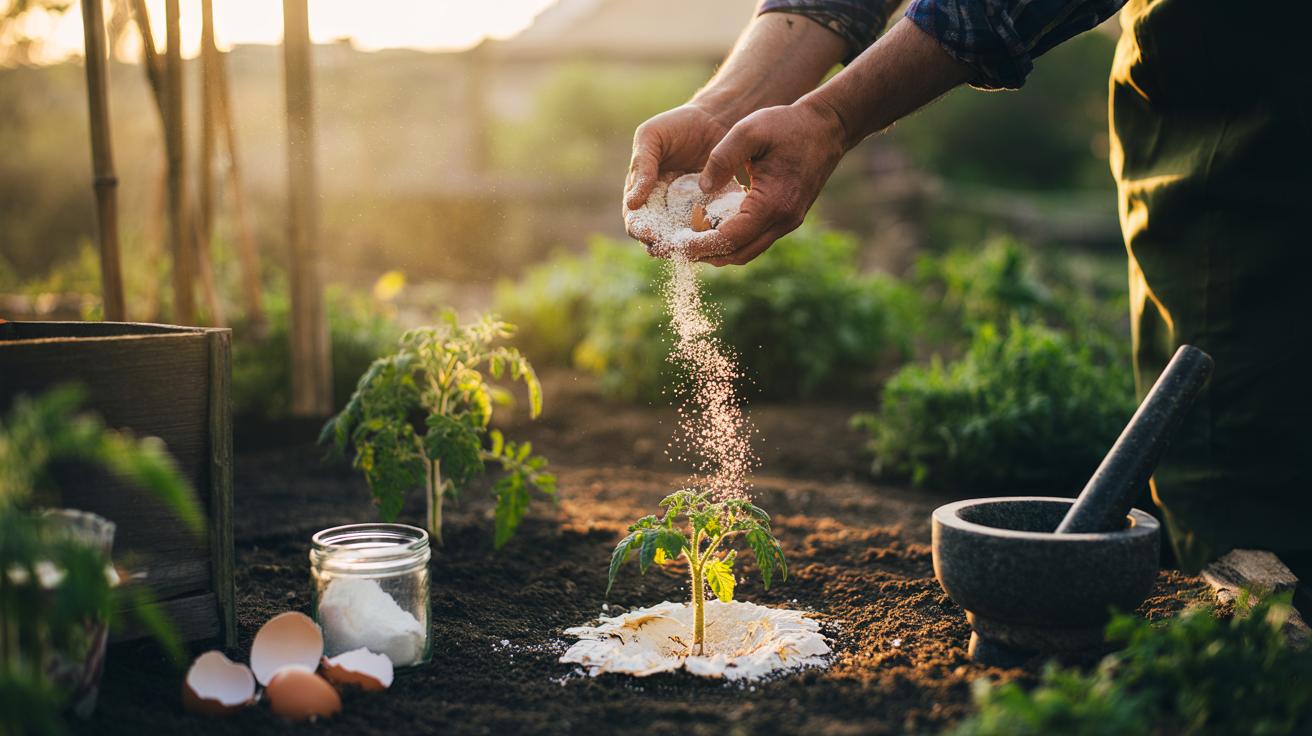
Save shells in a ventilated tub. Rinse lightly to remove residue that attracts pests, then dry—on a sunny sill or in a low oven (about 100–120°C for 10–15 minutes). Heating makes shells brittle, kills pathogens, and neutralises odour. Next, grind. A rolling pin between tea towels works; a mortar and pestle is better; a retired coffee grinder produces a fine, effective powder. Finer particles mean faster mineral release. Store the powder in a dry jar. That’s it: a reliable, free amendment on tap.
Hygiene counts. Keep raw egg contact off worktops and tools used for food. Remove inner membranes if they gum up the grinder; they add little nutritionally. Aim for consistency: a jam jar of powder each month goes far across balcony pots and beds. For a quick test, drop a pinch in vinegar—gentle fizz shows reactive calcium carbonate. No fizz? Keep grinding. Prepared well, eggshells are clean, odourless, and garden-ready.
Smart Ways to Apply Eggshells in Beds and Pots
Think small, regular doses. For containers, mix roughly 1–2 tablespoons of eggshell powder per 10 litres of potting mix. For beds, scatter a light handful per square metre and work it into the top 5 cm with a hand fork. In planting holes for tomatoes, peppers, and courgettes, add a teaspoon of powder and blend with compost—this positions calcium close to new roots. The goal is quiet support, not blanket coverage.
Top-dressing works too: dust around the dripline, then water in. Worm bins appreciate a spoonful fortnightly; the powder acts as grit and buffers acidity, keeping composting communities humming. Two cautions. First, eggshells are not a standalone cure for blossom end rot; inconsistent watering and root stress are often to blame. Second, don’t rely on sharp shell flakes to stop slugs—evidence is weak, and rain softens edges quickly. Use eggshells for minerals and pH buffering; use barriers, traps, or habitat tweaks for slugs.
Evidence, Caveats, and Quick Comparisons
Garden trials and soil science align on a core point: eggshell powder behaves like a very mild, slow (months-long) liming and calcium source. Benefits show up fastest in acidic, organic-rich soils where microbes mobilise calcium. They’re less dramatic on chalky ground already high in CaCO3. For blossom end rot, research stresses water management; calcium must move in the transpiration stream, so moisture consistency beats any last-minute calcium add-in. Use eggshells proactively, not as emergency medicine.
How do they compare with common amendments?
| Amendment | Speed | pH Impact | Best Use |
|---|---|---|---|
| Eggshell Powder | Slow | Mildly raises in acidic soils | Long-term calcium, waste reduction |
| Garden Lime (Calcitic) | Moderate | Raises pH noticeably | Correcting acidic soils quickly |
| Gypsum (Calcium Sulphate) | Moderate | Neutral | Adding calcium without changing pH |
Two final caveats. Test soil if you garden on alkaline chalk; adding more calcium may be pointless. And don’t oversell shells: they supply calcium and minor trace elements, but little nitrogen or potassium. Pair with compost, leaf mould, or seaweed feeds for a complete diet. Balance is the winning strategy.
Used thoughtfully, eggshells are a quiet revolution: a household scrap turned into resilience, structure, and long-term nutrition. They cost nothing, tread lightly on the planet, and reward patience with sturdier stems, steadier fruiting, and healthier microbial life. Start a jar today, grind a little each week, and fold the powder into your planting routine. Small habits, big gardens. Which approach will you try first—potting mix additions, bed dusting, or a measured sprinkle in the tomato trench?
Did you like it?4.5/5 (20)